
Should You Blog in 2020?

Does your business have a blog?
Chances are that even if your answer is “no”, you’ll have heard about the power of blogging online for your business. Back in the early days of the Internet, blogging represented a glistening new dawn for marketers.
It was relatively cheap to put out new content. Blogs would quickly gain traction on search engines, leading more users to the website, through which you could then (hopefully) sell those visitors your products or services. For a while, it all seemed so very easy!
Nowadays, in most marketing circles you might get a mixed bag of opinions when you talk about blogging. Some swear by it, saying the majority of their business comes directly through search engine traffic linked to their blog content and the keywords they contain. However, others question the value of the time needed to invest in quality blog content, wondering whether there’s a more tangible (and measurable) way to generate sales for an online business.
So, what exactly happened? What has led to the widespread doubt about online blogging, and is running a blog for your business really worth your time in 2020?
Well, in short, it’s a question of raw numbers.
Back in 2010 when the blogging boom really began, there really weren’t all that many authoritative experts in many fields on the Internet. So the early adopters, who managed to get their voice on the Internet as some of the first ‘influencers’ in their field, could find themselves gaining instant traction, beyond what is imaginable today.
Some of those voices became very authoritative, and understandably they weren’t afraid to shout from the rooftops about what blogging did for them! These people weren’t selling a fantasy; for them, blogging was like an online marketing panacea.
Some could quit their day jobs and begin living from their blog revenues or products and services linked to its success. With prominent figures like these doing the talking about blogging, it’s little wonder the idea spread like wildfire.
Nowadays, there are an estimated 1bn blogs on the Internet. At least. Think about that – that’s a blog for every 7 people living in the world today! Plus, there are other types of content that seem to be doing just as well or better as blogging once did, such as video (or vlogging), podcasts, infographics, or interactive content like quizzes.
ER… OK – IS IT TIME TO GIVE UP THE BLOG, THEN?
Not quite. You see, at Saint Digital we’re very much aboard the blogging bandwagon ourselves. Here we are, in 2020, and we still try to find time to sit down and write about our industry and the challenges we face as a web design agency.
A few more numbers for you might help to see why.
You see, there may be many, many, blogs out there. But we’re still convinced there are precious few that offer something of genuine quality.
Many posts are doomed to sit on page 3 or 4 of the search rankings, beneath the higher quality posts that – to put it bluntly, in the large majority of cases, they have copied content directly from. Repackaged it, maybe. Changed a few words, here and there. But those pieces aren’t creating any new value. The blogs are rushed in order to hit whatever arbitrary (quantitative) target their business has set. And then these people wonder why they don’t get good returns on the time invested!
It’s hard to write good content. And if anyone tells you otherwise, they’re lying to you. I studied English at University, and I thought that the essays I wrote in those days were amongst the hardest pieces of work I’d ever have to write. I was wrong – blogging presents its own challenge, no less elusive. Although the language I can use in these blogs may be a bit less formal and the topics arguably a bit less complex, each time I sit down to write a blog, I’m entering into direct competition with millions of other people, regardless of what the content area!
But anyway, I digress.
Blogging can still work as a strategy to grow your business – but it has to be incredibly well thought out. You can’t really hope to set yourself a quantitative target – say, a blog a day – and just churn out recycled content, and see a return.
I would suggest a changing of attitude towards blogging. Rather than a marketing strategy, see it as something a bit more fundamental than that – a medium of communication. It’s one of the few times your business can communicate with the outside world and your audience, outside of a business transaction or sales context.
So make your blogs what they should be – human, and unique. Understand your customers, and then write stuff that’s tailored to connect with them. That’s the route to blogging success.
To get you started, we’ve come up with some of our best tips for running a successful business blog in 2020.
1. STOP TRYING TO SELL

I know, I know. The reason you want to start a business blog is ultimately to sell your product or service. The thing is, everyone knows that already. You are a business. You’d very much like to do business with your audience. Nothing surprising, there!
But I’m speaking about something more fundamental here. When you really, really, write your business blog content just for the purposes of selling to your audience, it reeks a mile off, and can ruin your content.
It’s like the same irritating salesperson (I’m sure you know at least one..!) who rings your business every Monday morning with the subtlety of a bulldozer, trying to get you to buy their product or service, with a ‘one time only’ discount. It just sounds like BS!
And the worst thing is, it’s really not necessary.
Simply by writing good content and giving something back to your community, you’ll naturally rouse interest in yourself from those who enjoy your written thoughts. They’ll want to further understand who you are, and what you’re doing.
The psychologist Robert Cialdini wrote about this exact phenomenon in his excellent book ‘The Psychology of Persuasion” – reciprocity.
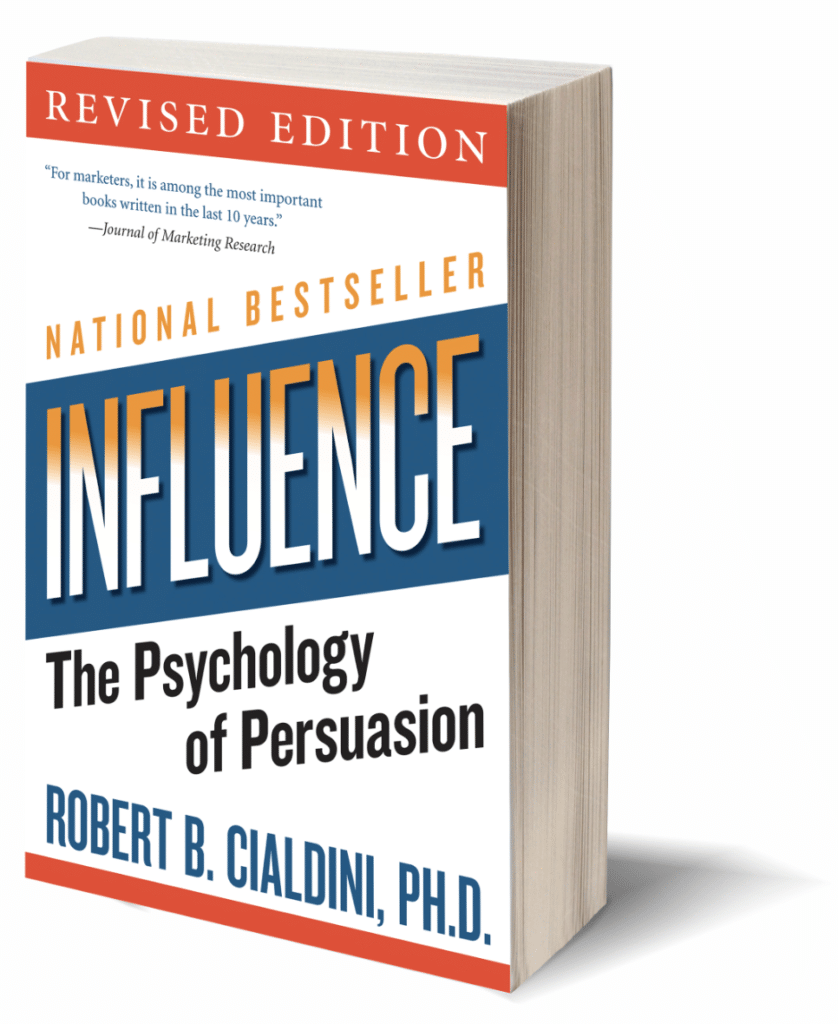
When we give something to someone, they naturally feel indebted to us, and want to give back.
That’s how you should be viewing your blogging. You’re giving free information on your area of expertise. If you do a good job, your audience might just feel thankful for what they have learnt from you, and trust that because you know what you’re talking about, your brand will be reliable too.
That makes them more likely to at least think of you when they are ready to buy whatever it is you’re selling – or, they might just decide to buy there and then!
It’s a subtle, but crucial change of mindset. Rather than writing your content to sell to others, you’re writing content to give to the world. And the world will give back; in the form of grateful readers showing a curiosity in your business.
2. TALK ABOUT YOUR OWN EXPERIENCE

We’ve already mentioned the increased importance to show a personal, human touch to your blogging. It’s a sure-fire way to stand out in an Internet drowning in blogs.
The best way to do this is to show your reader as much as you can about your own journey, be that as a human being or as a business.
Advice means much more when it comes backed up with your own personal experience.
The added benefit of taking this approach is that your content will truly be unique, and it’s far more likely to resonate emotionally with others who might have been through similar experiences to you – or, at the very least, enjoyed the way in which you wrote about it!
Be as honest as possible. Although sometimes this might seem counterintuitive – as if you are being unprofessional, or admitting that you don’t have all the answers – your readers will respect and appreciate your advice all the more for it. It’s okay not to know all the answers, and to admit as much! None of us do.
Your brand will stand out by a country mile from others who regurgitate content, simply by being more transparent with its own journey. Let your audience understand who you are and what you stand for.
Business will come as a natural result of the increased trust and rapport you’ll build with your readers.
3. MAKE YOUR BLOGS SKIMMABLE

Wait, what? I know it might seem a bit strange to include this point, especially after I’ve just waxed lyrical about the importance of baring your soul to your readers in your blog content. But the reality is, we live in a world that’s over-saturated with information. Blogs are just the tip of the iceberg; we have emails to read, texts to answer, YouTube videos to watch!
Much as we’d all like to imagine ourselves as being the online equivalent of Ernest Hemingway, churning out crystalline prose that readers are hungrily gulping down before clicking ‘Refresh’ in fevered anticipation for more of the same, a good portion of your readers simply won’t have much time to read your content, no matter how good it is.
They – like you – are busy people. They are also skim-readers. They don’t have time for full-length essays.
Indeed, HubSpot’s research shows 43% of people admit to skimming blog posts!
Which is a shame, because the robotic gods of online marketing – Search Engine crawlers – love a good long blog post. Personally, I set myself a minimum target of 1,000 words per post.
How, then, to reconcile both goals? Simple – make great, longform content that’s also skimmable!
You need to make clever use of subheadings, so that even skim-readers can take useful information away by scrolling through your post.
Write great quality, lengthy content, but try as best you can to break your blogs down into actionable chunks. I’m a big fan of listicles (the concept, not the decidedly gross-sounding word… or is that just me?).
Plan your blog posts by brainstorming your ideas, then break down your mind-dump into a numbered list, with entries that you’ll then expand upon for readers with a bit more time (and the omnipotent Googlebot).
You might even consider including a video or podcast version of your blogs for readers on the go. By tailoring your content to all reader preferences – whether an aural or visual learner; a keen blog reader or a time-poor executive who wants answers quickly – you’ll increase your reach exponentially.
4. A LITTLE MORE CONVERSATION

So many blogs are attention-starved, which makes it mind-boggling that many blogs don’t respond to comments made on articles they took the time to write and formulate.
Not only are comments valuable for SEO (showing a level of user engagement search engine crawlers value), but engaging directly in your comments section with your readers helps you build valuable business relationships. Of course, as we discussed earlier, this doesn’t mean directly trying to approach everyone who leaves a comment with a sales pitch.
But it does mean showing that you are open to conversation. Comments are a great way to show the depth of your knowledge and understanding of the topic you’re blogging about. Plus, your commenters will value the fact that you take the time to respond directly to them. Again, it’s about making sure your brand and business stand out from a ton of others.
All comments are valuable, and you should treat them as such. Even if a fly-by-night grammar police member swings by your post to tell you you left an apostrophe where it shouldn’t be, thank them for taking the time! Every comment helps boost your SEO, even pedantic ones – and hey, at least they cared enough to let you know.
This doesn’t just apply to the conversations that happen in the comments section on your own website, of course. A similar approach on social media, including LinkedIn Pulse (LinkedIn’s own blog publishing platform) will also pay dividends. For whatever reason, I’ve found that people tend to be more likely to leave comments on social media – perhaps because it’s a standard part of social media functionality to be able to express your opinions on what gets shared. That makes social media a great place to engage in friendly conversation about the topics you raise.
The relationships you’ll forge and the lasting impression you make in the minds of those who see your transparent approach to business will pay dividends.
5. MOBILE EXPERIENCE MATTERS

The final key point I want to draw to your attention is the mobile experience of your users. So many business owners build their websites and blogs with a focus on desktop or laptop. And look, I get it.
Even I, as a web developer of a decade’s experience, struggle sometimes to think of mobile first when I’m building out particularly complex designs. Heck, sometimes effects that look stunning on my 21-inch iMac can fall apart when I resize the screen to half its full width, creating design challenges. Mobile is a whole different kettle of fish.
And yes, I admit it – it’s nearly always the last thing I build out with my designs, once the client is happy with the desktop experience.
It’s kind of a logical way to build.
But if your web designer doesn’t make a point of proudly showing you the mobile experience at the time of project completion in 2020, you’d do well to have some questions.
48% of the webpages viewed worldwide come from mobile devices. I don’t know about you, but I frequently find myself checking the news and other blog content on the go.
Large content websites such as newspapers know the importance of mobile, which is why you’ll always find blissfully large and legible text when you hit their page on a mobile – and many offer app experiences too.
I’m not saying you need to break the bank in creating an accompanying app, but I am serious in saying that if you want your blog to rank well, you need to offer a comparable experience for mobile readers as those on larger devices.
Google knows this, and you can bet your bottom dollar its search crawler does too! An increasingly important ranking factor is mobile experience, which is measured by site speed, legibility, and user engagement, amongst others.
If you’ve got a dated website, which displays your content at the same size regardless of user device, users won’t stick around if they have the misfortune to land on your page from their mobile.
Nor is your page going to appear high on the search engine results pages (SERPs) if your site takes an eternity to load on a mobile, because you’re forcing it to load huge, desktop-resolution images.
The best way to know how well you’re doing for the mobile experience is to take the time yourself to give it a test drive. Land on your site with your mobile and see if you can find your way around to your best content. See if it doesn’t make you want to pull your hair out at any stage. If it doesn’t, you’re doing better than most!
Mobile is a pain point for most businesses – if you can ensure your website is mobile-optimised, you’ll be way ahead of the competition.
WRAPPING IT UP…
As I hope I’ve been able to demonstrate, there’s still definitely value in having a good blogging strategy in 2020. But the operative word in that is “good”. Blogging well these days requires investment. You can’t just show up.
Take the time to plan out content that you believe will be best-in-class, with insights that you’re uniquely placed to deliver to your audience. And then, ensure you deliver a great experience for your reader, on all devices (especially mobile).
Need help planning out a content marketing strategy which will employ blogging to its full potential in 2020? Speak to us.
Happy blogging!
GOT BIG IDEAS?
Inspired to start your own blogging strategy in 2020, with a game-plan to engage your audience and create major ripples in your sector? We’re here to help you build the next big blog in your sector.
Please use the form below to let us know of your grand designs, or if you’re keen on an online marketing campaign, a new website, or a funky rebrand – and we’ll be back in touch to (hopefully) help make them happen.

